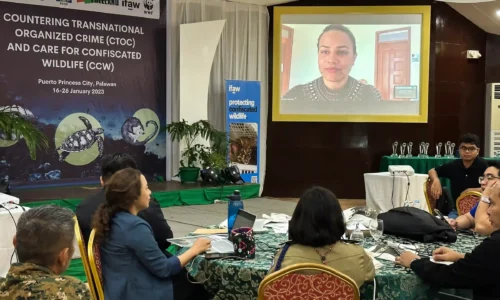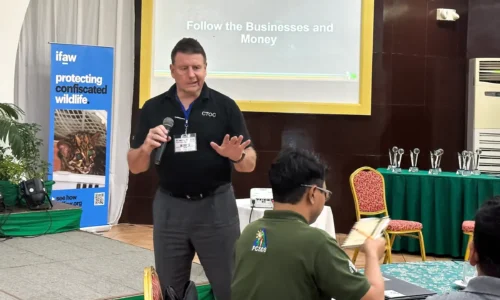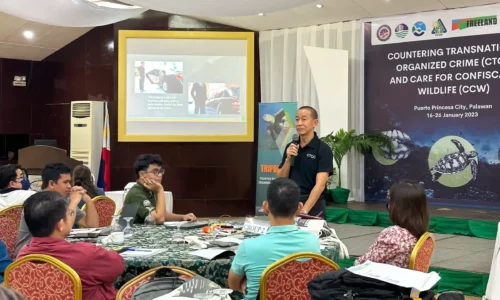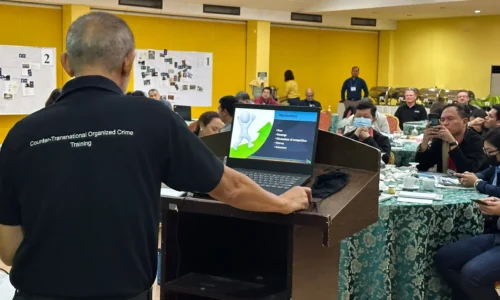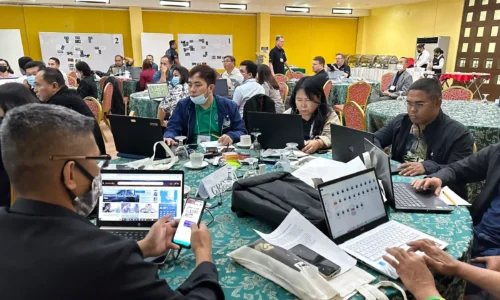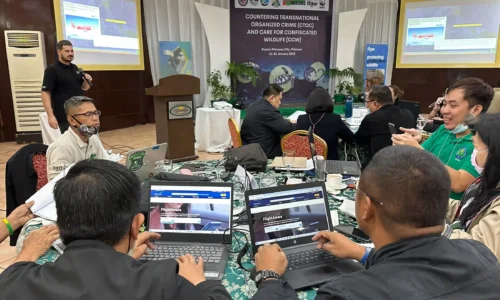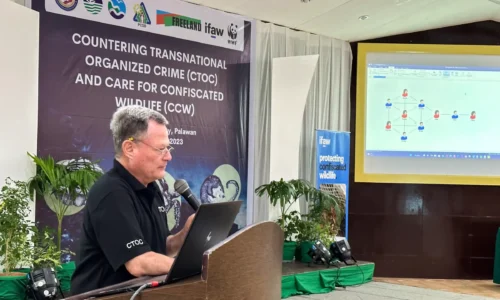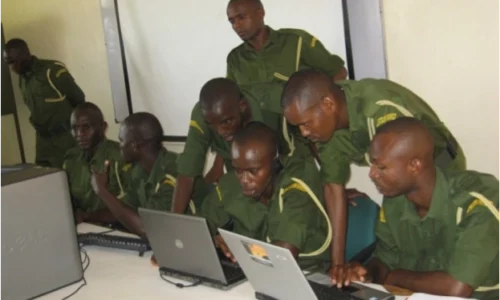

This video welcomes you to the CTOC Online Training Course and provides an overview on what you will learn.
Introduction to CWT provides an overview of wildlife crime, covering its scale, product flows for important commodities, drivers and impacts.
Introduction to Transnational Organized Crime is about understanding the supply chains utilized by the criminal group being investigated.
Development of Informants illustrates the methods for developing informants as sources of information.
Source Management illustrates the methods for managing informants and sources of information.
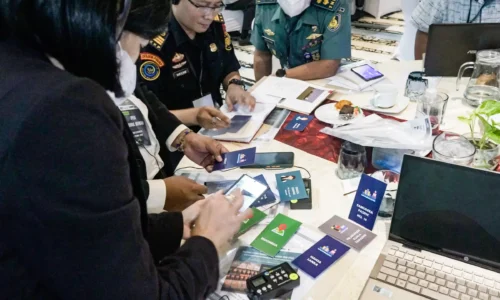
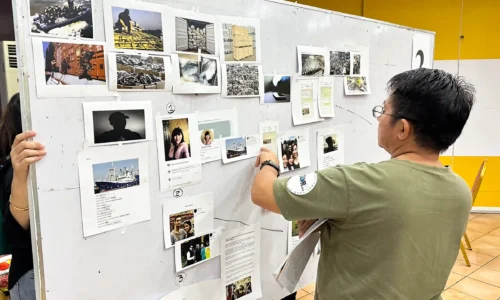
Document Exploitation (DOMEX) illustrates the identification and collection of documents required for successfully investigating TOC cases.
Specialized Investigative Techniques illustrates Controlled Deliveries (CDs) as a specialized investigative technique that can be used in transnational organized crime investigations.
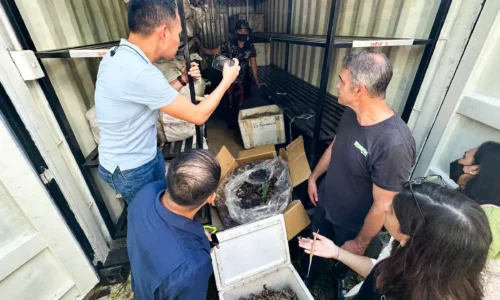
Acquisition and Handling of Evidence provides in-depth examination of the types of evidence that can be collected, including the procedures and requirements for correct collection, handling, sealing...
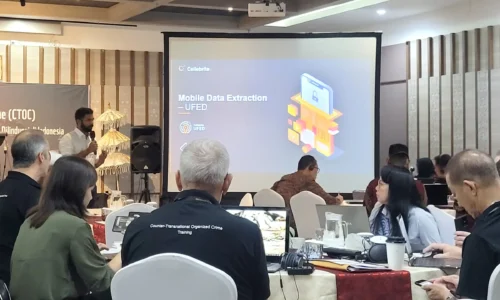
Digital Forensics and Communications Exploitation explains the various types of electronic equipment from which information can be extracted and analyzed.
Open Source Intelligence (OSINT) Techniques(Theoretical) outlines the various types of online resources that can be used to obtain information on suspects who are under investigation.
Open Source Intelligence (OSINT) Techniques(Practical)will guide you throughfree tools which you can use throughout the course of your investigations.
Interviewing Techniques provides an introduction to the skills necessary for obtaining information during an interview with a suspect or witness.
Anti-Money Laundering describes techniques that enable investigators to develop hypotheses as to how criminals attempt to hide the proceeds of their illegal activities.
International Assistance and Collaboration details the value of international assistance and collaboration in transnational organized crime investigations.
Financial Investigations outlines how financial investigations can support criminal investigations by obtaining financial data and proving illegal income.
This Module: Supply Chain Analysis provides an overview of the importance of addressing the escalating wildlife trafficking problem through understanding supply chains.
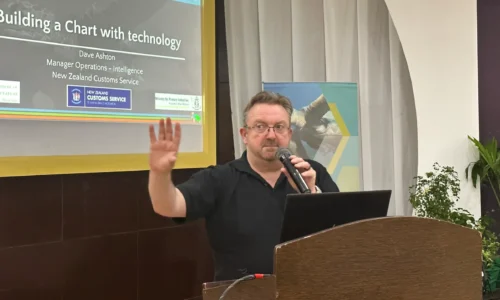
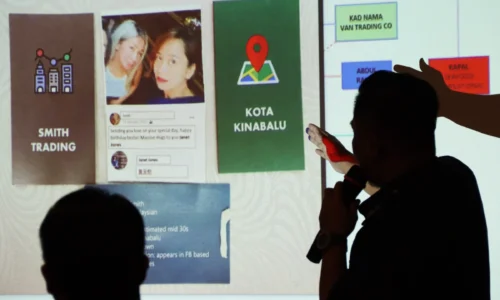
Link Chart Development is designed to develop an understanding of how criminal gangs can be connected using the concept of “link analysis.”
Operational Planning and Targeting Profiles takes a deep dive into operations plans and case takedowns.
Prosecution explains why a successful prosecution is a goal of effective investigations and how prosecutors are an important part of the task team.
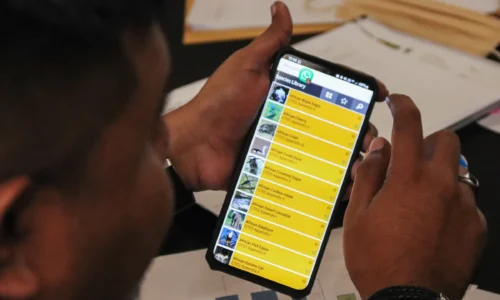
WildScan explores a free smartphone application which will allow you to identify commonly trafficked animals by answering a few non-technical questions.
In this session, you will learn ways to work up the chain to investigate the organizers and leaders of the criminal organizations.
This module explains the concept of Species Victim Impact Statements and how to use them at court.
You can access the CTOC Mastery Certificate after successfully completing all CTOC Modules and answering the course survey questions.