

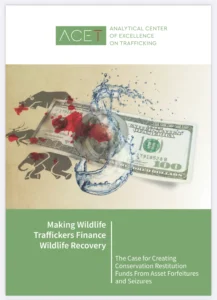
Organized crime continues to destroy wild animal populations around the world, reaping billions of dollars in profit. Meanwhile, law enforcers and conservation organizations struggle to fund their protection efforts. This new multi-language report guides governments on how to reverse the equation by seizing assets from wildlife criminals to finance wildlife protection. The report, “Making Traffickers Finance Counter-Trafficking: The Case for Conservation Restitution Funds from Asset Forfeitures and Seizures” is available in English, Vietnamese, Thai, Lao, and Khmer.
Download the report:
Wildlife trafficking, an industry worth billions of dollars annually, is leading to the degradation of nature and the communities that live around them. The illegal trafficking of wildlife and wildlife products is strengthening criminal syndicate networks and in turn corruption, undermining governance and weakening the security of affected communities.
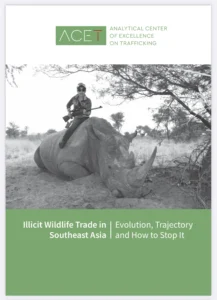
As both a supplier and consumer, Southeast Asia lies at the heart of the trade and plays a major role in the international fight against wildlife trafficking. Giving the region and it’s actors the tools and strategies will help to dismantle these criminal syndicates and set an example for the rest of the international community.This report maps the evolution and trajectory of wildlife and counter trafficking in Southeast Asia, while analyzing what has (and has not) worked and where the region should go next. The research points to challenges, opportunities, and a pathway forward.
Available in English, Thai and Vietnamese.
Download the report:
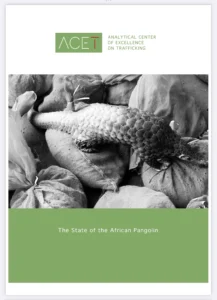
With pangolin species in Asia facing catastrophic decline due to poaching, traffickers have increasingly started to source scales from African pangolins to cater to Asian demand. This demand can only be countered by a comprehensive response encompassing local and regional law enforcement cooperation, involving stakeholders from pangolin habitat areas, and reducing consumer demand.This report traces the rise of the trade, and offers recommendations on ending it.
The Case for a Planetary Security Program
In Rome, Italy, leaders of the world’s 20 wealthiest nations convened to address global priorities under the banner “People, Planet, Prosperity.”
High on this year’s G20 agenda is improving COVID-19 vaccine rollout to lower-income countries, and improving preparedness for future outbreaks. This is of course badly needed. But it is equally important to take a step further and examine the root caused of zoonotic outbreaks in order to prevent new, potentially more destructive ones from happening in the first place, sparing us from undergoing entirely new inoculation and recovery efforts all over again.
It’s time to re-examine the most pressing threats to our planet and how governments plan, and spend our money, to stop them.
Not a member yet? Register now
Are you a member? Login now